Molly Chi Wadi, Karjat
A Weekend House Embedded in the Karjat Landscape
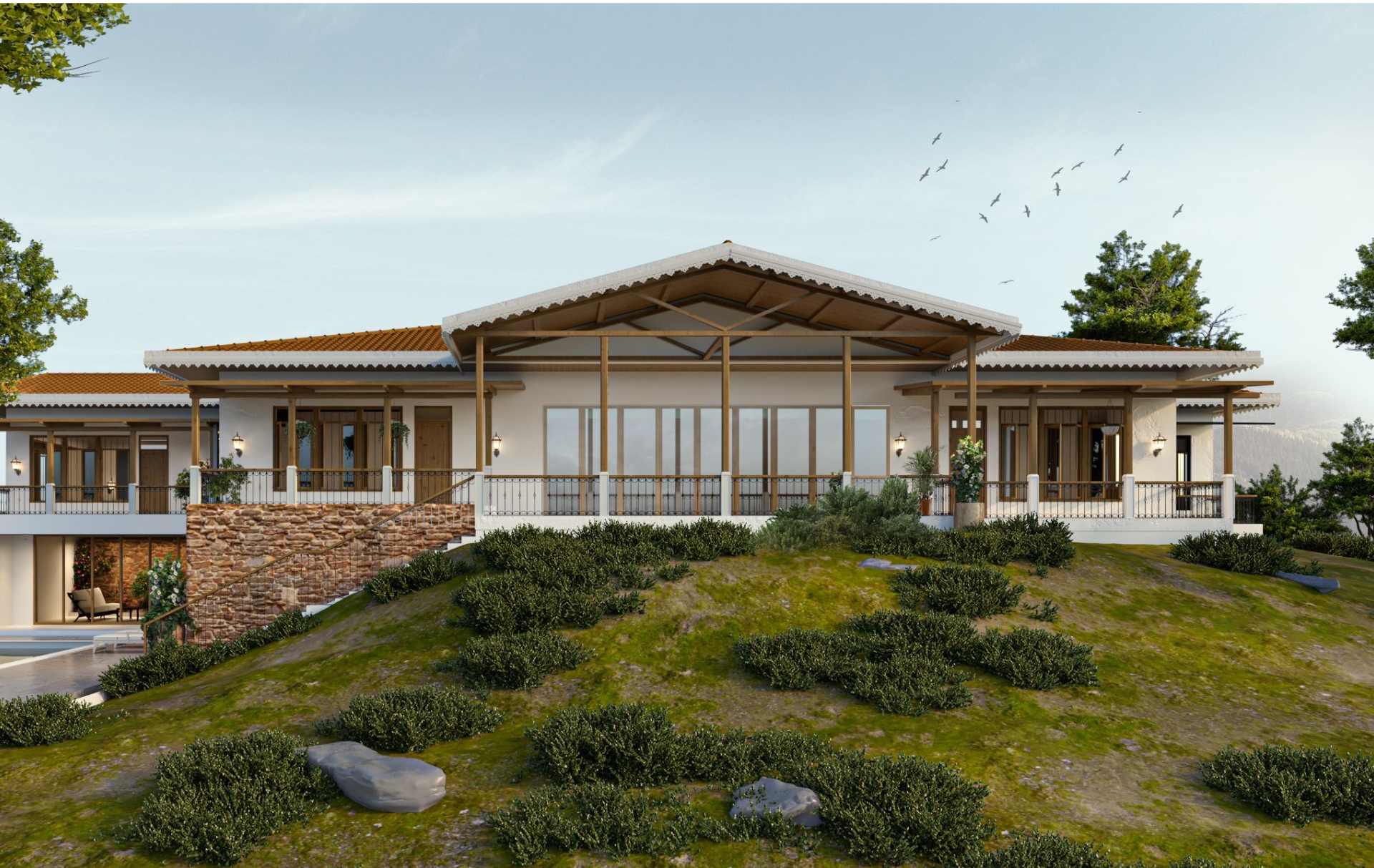
Molly Chi Wadi is a weekend retreat set within seven acres of contoured land in Dhamni, Karjat. Overlooking a landscape that transforms dramatically during the monsoon—with multiple seasonal waterfalls appearing across the valley—the house is conceived as a quiet insertion within nature, allowing the terrain to guide its form and placement.
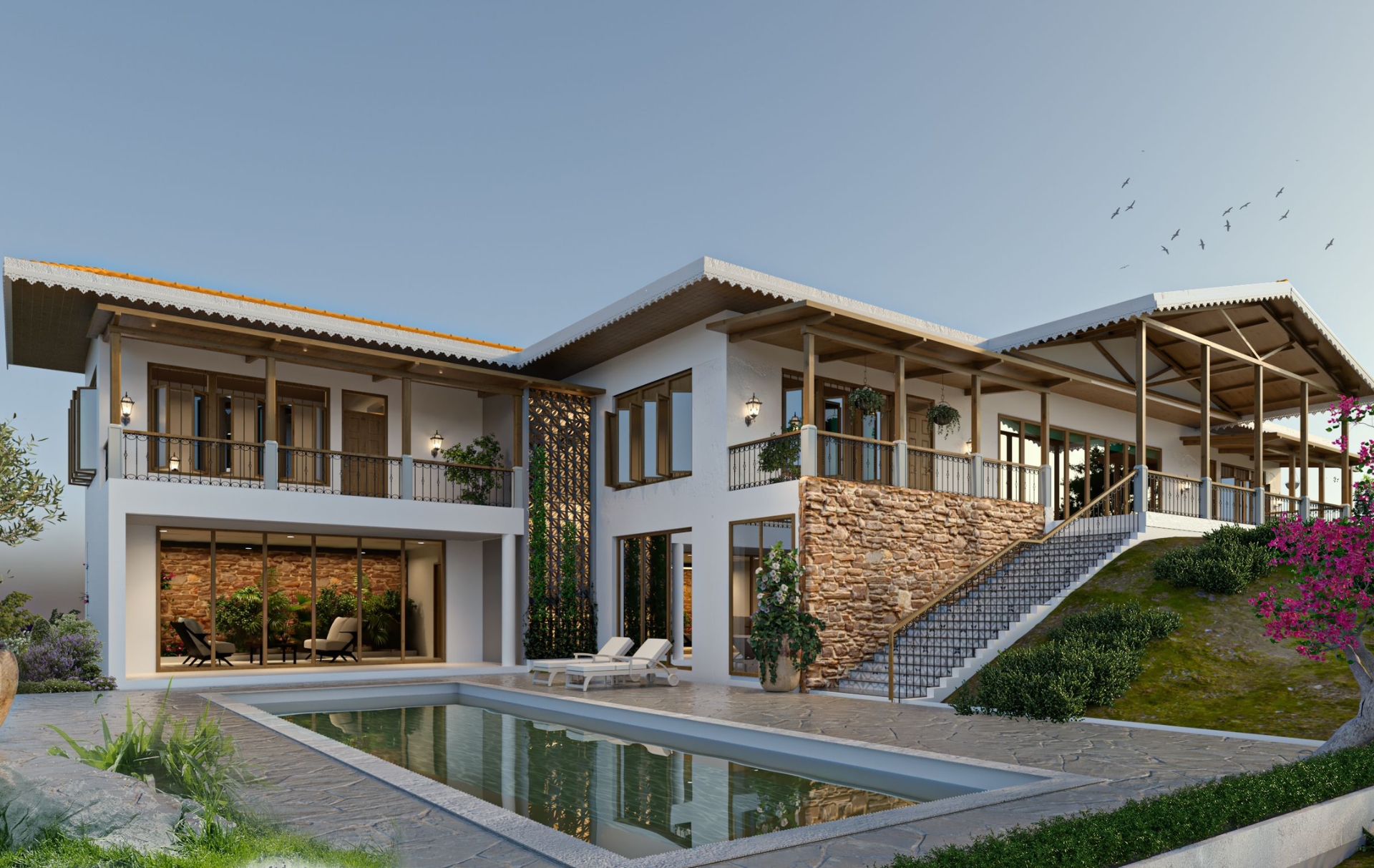
The site’s steep contours informed the architectural strategy from the outset. Rather than levelling the land, the design works with its natural gradients, resulting in a ground-plus-basement structure that is embedded into the topography. This approach minimises intervention while allowing the built form to sit comfortably within the landscape. Outdoor spaces are organised around a large swimming pool, which acts as a central element within the open terrain.
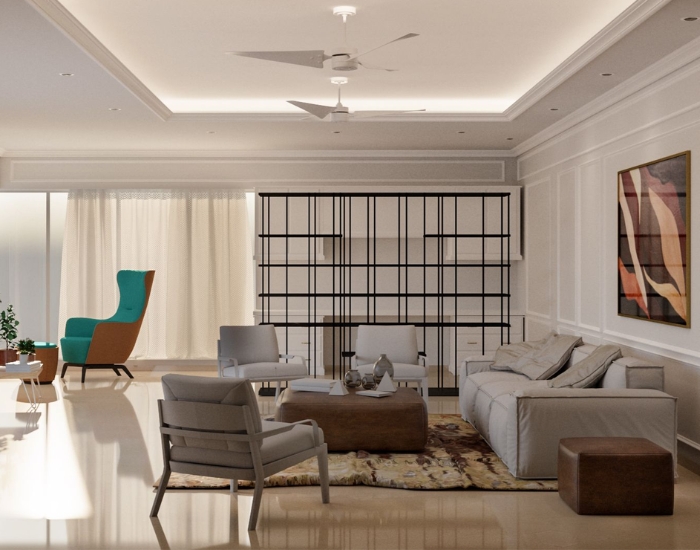
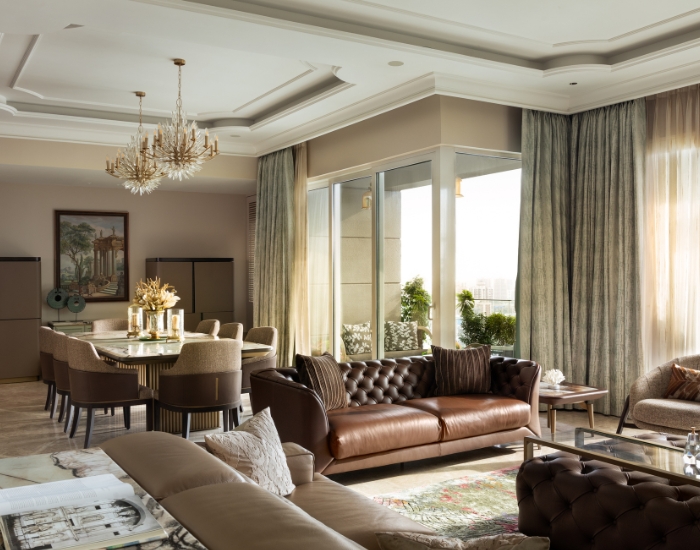
The internal planning prioritises volume and openness. The house accommodates four bedrooms, along with a den and game room, organised around a double-height living space that rises to 22 feet. This central volume brings together living and dining functions, allowing large gatherings while maintaining a sense of spatial generosity.
Material choices reinforce the house’s relationship with its setting. Bharat flooring and rough Shabad stone are used extensively for their durability and ability to age over time, acquiring a natural polish through use. The palette remains largely neutral and earthy, allowing textures and light to define the interiors.
Furniture and objects introduce layers of history and character. Pieces sourced from Pondicherry, including vintage beds, are paired with artwork from Chor Bazaar, creating a lived-in quality that contrasts with the clarity of the architectural framework. This restraint is deliberately interrupted in the kitchen and bathrooms, where bold primary colours are introduced, offering moments of visual contrast within the otherwise muted interiors. A vegetable garden extends this domestic life outward.
The thresholds and transitional spaces are treated with equal care. The entrance is marked by a salvaged green door, detailed with coloured mouldings, setting up a tactile and layered arrival. Verandahs, a small fountain, and open-to-sky courtyards create a sequence of semi-open spaces that mediate between inside and outside. Perforated clay walls allow light and air to filter through, while a clay-tiled RCC roof and metal doors balance climatic response with durability and security. The consistent use of double-leaf doors reinforces a sense of openness throughout the house.
During the monsoon, the landscape becomes lush, with up to 20–25 waterfalls visible from the living areas, transforming the house into a vantage point for seasonal change. Given the site’s relative isolation, infrastructure such as water and electrical systems was developed on site, ensuring the house functions independently while remaining closely tied to its environment.
LocationKarjat
Project Statusongoing
TypologyResidential